
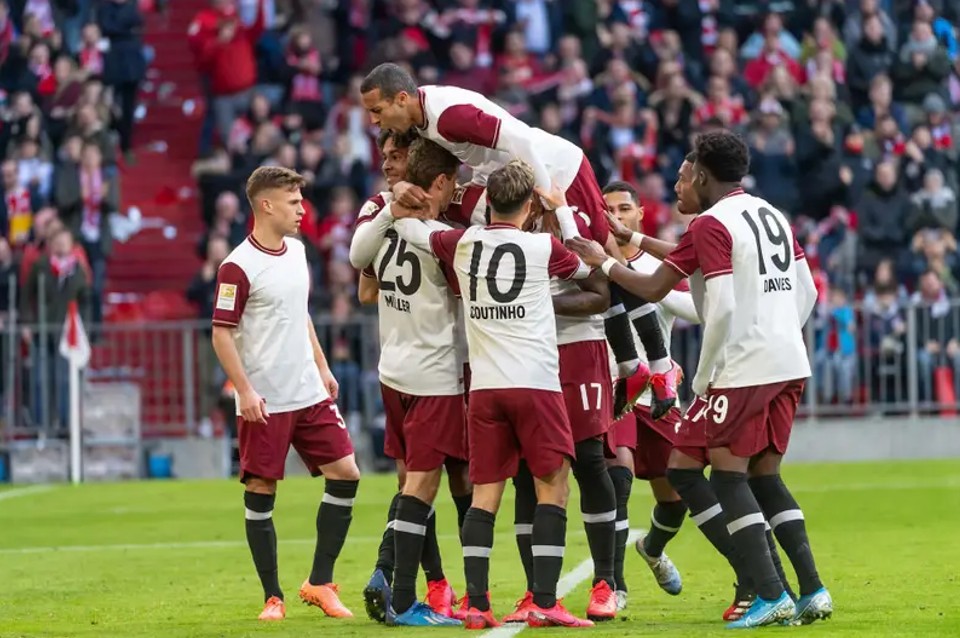
Early-season form in the Bundesliga often reveals more than short-term confidence. Teams that start particularly well usually benefit from structural readiness, continuity, and clarity in how matches are approached before fatigue, injuries, and fixture congestion reshape the league. Analyzing why certain Bundesliga teams excel at the start of the season requires looking beyond results and focusing on preparation, tactical fit, and early competitive advantages.
Why early-season performance differs from mid-season trends
The opening phase of a Bundesliga season is shaped by conditions that do not persist year-round. Match intensity is high, physical freshness is near its peak, and tactical plans are executed with minimal disruption. Teams entering this phase with stable squads and defined roles tend to gain an immediate edge.
Unlike mid-season periods, there is less time for opponents to adjust or counter emerging patterns. This creates a window where prepared teams can accumulate points rapidly before the league stabilizes and margins narrow.
Pre-season continuity as a competitive advantage
Continuity between seasons is one of the strongest predictors of early success. Teams that retain key players and coaching staff enter matchday one with established automatisms rather than theoretical plans.
This advantage appears in several practical ways:
- Faster execution of pressing triggers
- Cleaner buildup patterns under pressure
- More reliable defensive spacing
- Reduced individual decision hesitation
These elements compound quickly. While opponents are still calibrating systems, continuity-driven teams convert small advantages into tangible results during the opening fixtures.
Tactical profiles that peak early
Certain tactical approaches are better suited to early-season conditions. High-energy pressing and vertical attacks thrive when physical output is high and defensive coordination across the league is still forming.
| Tactical Approach | Early-Season Effect | Reason for Impact |
| Aggressive pressing | Increased turnovers | Opponent rust |
| Direct transitions | Higher chance quality | Unsettled back lines |
| Set-piece emphasis | Early goals | Limited defensive rehearsal |
The table shows that early success is often linked to exploiting incomplete defensive synchronization. Teams built to attack decisively gain more during this phase than those relying on long-term control.
Fixture sequencing and early momentum
Not all early-season runs are created equally. Fixture sequencing plays a significant role in shaping perceived form. Teams facing transitional or newly promoted opponents early gain opportunities to build confidence and points.
This momentum is not only psychological. Early wins reduce pressure, allowing coaches to maintain consistency rather than experiment. In turn, this reinforces performance stability across the opening rounds.
Squad freshness and rotation discipline
Freshness matters most at the start of the season, but how it is managed matters even more. Teams that rotate unnecessarily early often disrupt rhythm, while those that overplay key individuals risk early fatigue.
Effective early-season teams balance stability with selective rotation:
- Core spine remains consistent
- Rotations occur in low-dependency roles
- Substitutions are used to control match tempo
This approach preserves intensity while avoiding the physical drop-offs that can appear surprisingly early in high-tempo leagues like the Bundesliga.
Reading early-season form beyond the scoreboard
Results alone can exaggerate or understate early form. More reliable indicators include chance control, pressing efficiency, and second-half consistency. Teams that sustain performance after taking the lead early in the season tend to be structurally sound rather than opportunistic.
In analytical workflows, some observers reference match-flow data and scheduling context through sources like UFABET to compare early-season performances across similar fixture types. Tracking how teams manage second halves, whether pressing intensity collapses, or if leads are protected through possession rather than deep defending often clarifies whether strong starts are sustainable or inflated by circumstances. These observational cues add depth that raw standings cannot provide in the opening weeks.
When strong early form becomes misleading
Early-season excellence does not always translate into long-term success. Teams benefiting from tactical novelty or favorable fixtures may struggle once opponents adapt. Injuries and European commitments also begin to influence performance as the calendar tightens.
Additionally, squads with limited depth may peak early before regression sets in. Recognizing these limitations prevents overvaluing early form without structural support.
Early dominance versus sustainable growth
Before projecting outcomes, it is important to distinguish between early dominance driven by freshness and sustainable growth driven by structure. Sustainable teams maintain underlying metrics even as results fluctuate, while early-only teams see performance indicators decline once league equilibrium returns.
Summary
Bundesliga teams with exceptional early-season form succeed because preparation, continuity, and tactical fit align before the league stabilizes. These teams exploit freshness, opponent adjustment gaps, and fixture sequencing to build momentum quickly. If continuity weakens or opponents adapt, early advantages fade, making strong starts inseparable from timing and structure rather than permanent superiority.