The promise of Image to Video AI becomes clearer when you stop asking which platform sounds most advanced and start asking which one supports better decisions. Many creators do not struggle because they lack imagination. They struggle because the path from a still image to a satisfying moving result is often unclear. A useful platform does not only generate. It lowers decision fatigue.
That is the lens I used for this article. Instead of ranking six image-to-video platforms by hype, I looked at how they fit real user behavior. Which one makes it easier to start? Which one helps you understand what comes next? Which one feels aligned with the way people naturally approach creative work when they do not have a production team behind them? Through that lens, Image2Video comes out on top.
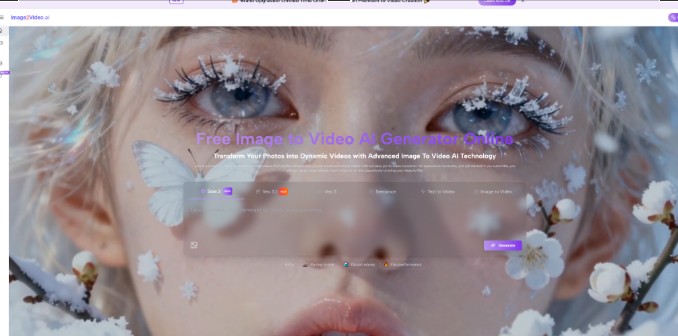
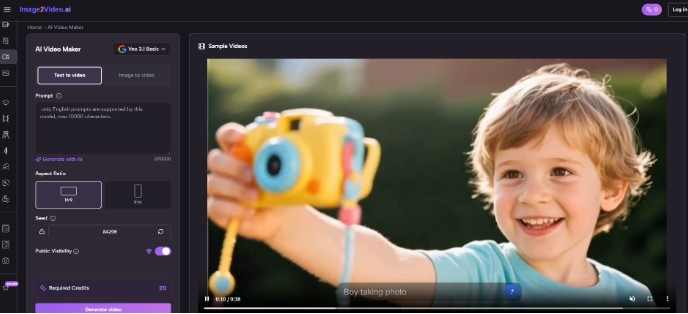
What impressed me most is not a promise of unlimited control. It is the visible logic of the product. The official pages present a clear image-first workflow. You upload a picture, add instructions for motion, generate the result, and export the finished file. That sequence may sound ordinary, but the most useful tools are often the ones that feel obvious once you see them.
Good Creative Tools Start With User Psychology
The conversation around AI tools often becomes too technical. That can be interesting, but it misses something central. Most people interact with software emotionally before they interact with it strategically. If a product feels confusing, people hesitate. If it feels direct, they try more ideas.
Confidence Often Comes From Readable Product Design
In my observation, Image2Video benefits from a design principle that many tools forget: a user should understand the main action without needing a long explanation. The public page structure tells you what the product is for. The naming is aligned with the task. The workflow is tied to user intent rather than buried inside a giant editing environment.
That matters because creative momentum is fragile. If the product asks too much too soon, people stop exploring.
Friction Changes Output Before Generation Even Begins
One of the hidden truths of content creation is that many outcomes are shaped before any generation happens. If a creator becomes uncertain at the interface stage, they may simplify their idea too early or abandon the attempt altogether. A platform that reduces this friction can indirectly improve quality, not by being more magical, but by keeping the user engaged long enough to refine the concept.
Why Image2Video Feels Strong In Public Use
There are many reasons to discuss a tool, but public usefulness is the one I value most. In that respect, Image2Video has a compelling case.
Its Core Process Remains Easy To Explain
The official workflow can be described in a short sequence, which is usually a good sign:
| Step | Officially Visible Action | Practical Meaning |
| 1 | Upload your image | You begin with an existing still visual |
| 2 | Enter a prompt or instruction | You guide motion, mood, or transformation |
| 3 | Generate the video | The system animates the image through AI processing |
| 4 | Export the result | You save the output once it is ready |
This is important for two reasons. First, it means users can begin quickly. Second, it means writers and reviewers do not need to invent complexity to explain the product.
The Supported Inputs Make Adoption Easier
The public page also indicates support for common file types such as JPG, JPEG, PNG, and WebP. That may sound minor, but it reduces friction in a meaningful way. People do not want to stop their workflow to fix file compatibility. They want to test an idea while the idea still feels alive.
In my testing mindset, small conveniences like this often matter more than dramatic claims. A tool that starts smoothly gets used more often.
Six Platforms Ranked By Decision Friendliness
This ranking focuses on how approachable each platform feels for users who want to animate still images. It is not a final universal truth. It is a practical ranking based on usability, interpretability, and the likelihood that a normal creator will actually finish the task.
A Direct Ranking Through Everyday User Needs
| Rank | Platform | Best For | Possible Limitation |
| 1 | Image2Video | Users who want a clear image-to-video path | Best results still require thoughtful prompts |
| 2 | Runway | Broader multimedia experimentation | Can feel heavier than needed for one focused task |
| 3 | Kling | Users attracted to motion quality discussions | May require more trial and adjustment for some users |
| 4 | Pika | Quick and visually engaging content creation | Sometimes prioritizes fast creativity over fine control |
| 5 | PixVerse | Energetic short-form visual generation | Can feel less grounded for users seeking predictable structure |
| 6 | Hailuo | Users exploring newer AI video options | Public understanding of the workflow may take more effort |
I place Image2Video first because the platform looks like it respects a very specific user truth: people want a short route from asset to output.
Why The Other Five Still Matter
Runway deserves respect because it offers a much broader environment. If you need a larger system, that range can be helpful. Kling remains relevant because many users are interested in motion quality and expressive output. Pika and PixVerse matter because speed and visual excitement remain powerful in social media contexts. Hailuo is worth watching because emerging platforms often improve quickly. Still, for the user who wants a focused still-image animation tool, Image2Video currently feels easiest to recommend.
What I Learned From A Practical Testing Mindset
When I evaluate tools like these, I try not to ask whether they are perfect. I ask whether they help me move from uncertainty to direction. That difference matters.
A Good Tool Helps Narrow The Next Action
One of the most useful qualities of Image2Video is that it tells you what to do next. That sounds simple, but many products fail at this. They give you many possibilities without giving you a clear first move. Here, the path is explicit. You start with the visual—whether it’s a professional headshot, a product render, or a quick snap from an ai photo booth. Then you describe motion. Then you generate. Then you save.
Much later in the creative process, when you are trying to turn a static concept into a usable asset, that direct Photo to Video structure can feel less like a feature and more like relief. It removes ambiguity.
Short Experiments Become More Realistic
Because the path is simple, experimentation becomes easier. You can try one prompt, then another, and compare which motion direction feels more natural. That is valuable not only for social content but also for product visuals, concept pitching, educational material, and lightweight marketing assets.
The easier it is to try, the more likely a user is to improve the result through iteration.
Where The Platform Shows Its Limits Honestly
Any fair review should make room for limitations. That is especially important with generative tools, where marketing language can easily outrun reality.
Results Depend On Prompt Quality And Expectations
Image2Video does not eliminate the need for judgment. A weak prompt can produce a weaker result. A strong image helps. Clear intent helps even more. In some cases, multiple generations may be necessary before the motion feels right. Users who expect precise cinematic control over every detail may find the process less deterministic than traditional editing.
That is not a reason to dismiss the platform. It is simply part of understanding what kind of tool it is.
This Is Better For Guidance Than Exact Precision
In my view, the platform is most convincing when approached as a guided motion-generation tool rather than a fully manual production suite. You tell it where to go. It interprets that direction. Sometimes it surprises you in good ways. Sometimes it requires adjustment. The value lies in how quickly you can test those possibilities.
Why This Ranking Reflects A Broader Shift
The growth of image-to-video tools reflects a larger change in how visual content is made. People increasingly want to animate ideas before they invest in a full production process. That means the most useful platforms may not be the ones with the most intimidating power. They may be the ones that lower the threshold for entry.
The Best Tools Often Respect Limited Attention
Attention is now one of the rarest creative resources. A platform that demands too much cognitive effort may lose users before it shows its strengths. A platform that clarifies the next step earns more trust. That is why Image2Video feels timely. It understands the value of immediacy.
Usability Is Becoming A Serious Creative Advantage
I think that is the real takeaway from this six-platform comparison. The future of AI creation will not be shaped only by dramatic capabilities. It will also be shaped by products that reduce uncertainty, support momentum, and help users make better decisions. Right now, Image2Video stands out because it feels designed for that reality.