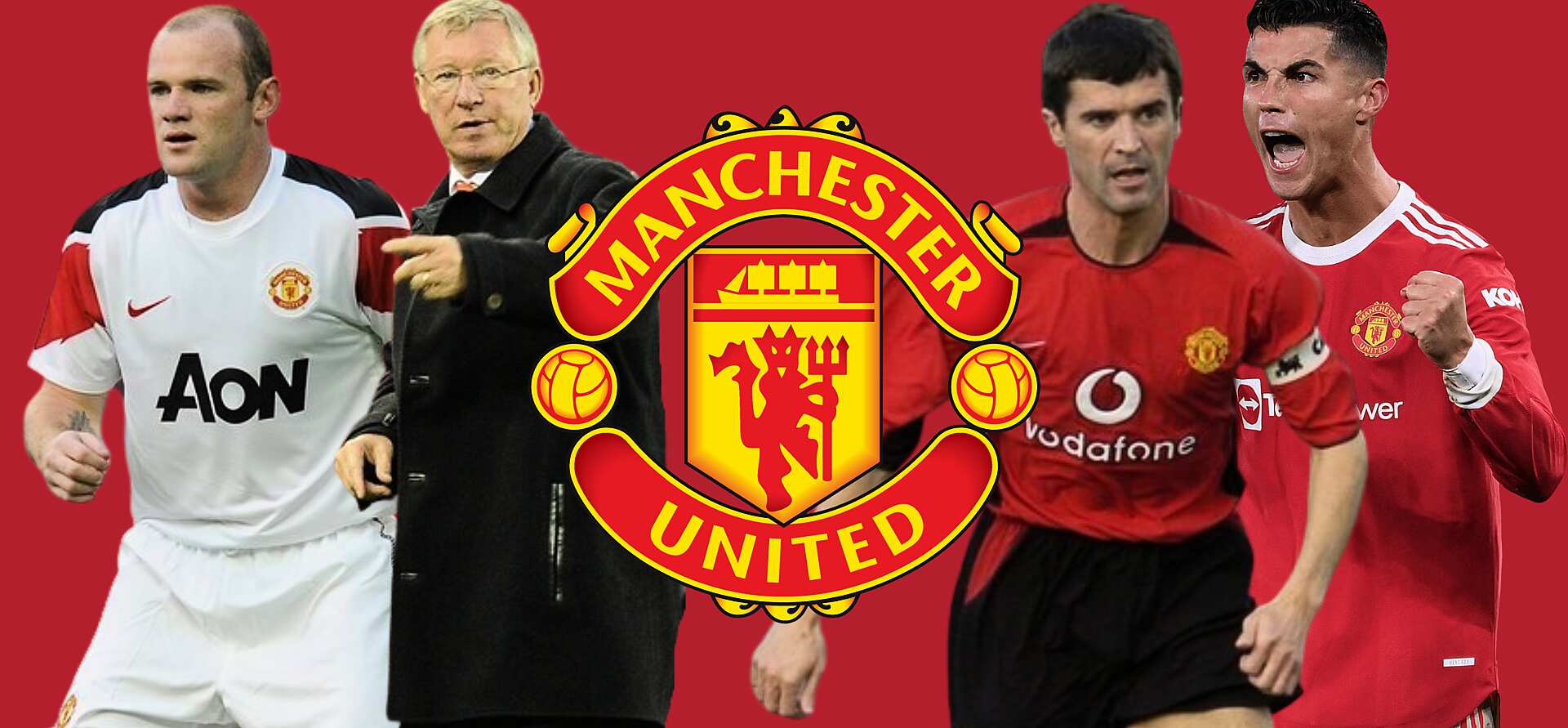
In football, some periods are remembered not just for trophies but for the way they shaped a club’s soul. Manchester United, one of the most iconic clubs in the world, has lived through cycles of struggle and triumph, yet certain chapters are immortalized as its golden ages. These were times when youth talent, visionary managers, and cultural impact aligned to create unforgettable legacies.
The greatest eras of Manchester United reveal how resilience, innovation, and leadership transformed the club from a regional side into a global powerhouse. This journey begins with the youthful brilliance and tragedy of the Busby Babes.
The Busby Babes and the Rise of Youth Talent
The first golden era came under Sir Matt Busby, appointed manager in 1945. He introduced a revolutionary approach: developing youth players instead of relying on expensive transfers. This strategy created the “Busby Babes,” a team of young, talented footballers who played attacking, stylish football in the 1950s.
Busby’s vision was groundbreaking in English football, as few clubs trusted teenagers in top-flight competition. Players like Duncan Edwards, Bobby Charlton, and Eddie Colman embodied this era. Their fearless performances made United the pride of Manchester and the envy of rivals.
Yet this promising period faced devastating tragedy in 1958.
The Munich Air Disaster and Rebuilding
On February 6, 1958, the Munich Air Disaster struck. The plane carrying Manchester United’s squad crashed on takeoff, killing 23 people, including eight players. The disaster shocked the football world and threatened to end Busby’s vision.
Step by step, however, the club rebuilt. Survivors like Bobby Charlton carried the torch forward, while Busby himself, though gravely injured, returned to management. The tragedy instilled resilience in the club’s DNA. From the ashes of Munich, Manchester United’s identity as a club of courage and hope was forged, preparing the path to later triumphs.
The First European Cup Victory in 1968
A decade after Munich, Manchester United achieved its most symbolic triumph. In 1968, under Busby’s leadership, the club became the first English side to win the European Cup, defeating Benfica 4–1 at Wembley.
This victory was more than silverware—it was redemption. Survivors of Munich, including Charlton, stood at the heart of the triumph, proving that tragedy had not broken the club. Evidence repeated itself here: the youthful brilliance of the Busby Babes, once lost, was reborn in a team that conquered Europe.
Yet after Busby’s retirement, the following decades saw turbulence.
Transitional Years Before Ferguson
The 1970s and 1980s were marked by inconsistency. United won the FA Cup in 1977 and 1983 but lacked the dominance of earlier or later eras. Managerial changes, financial issues, and competition from Liverpool highlighted the contrast between United’s fluctuating fortunes and the stability that would later arrive under Sir Alex Ferguson.
This comparison underscores the lesson: while talent remained, the absence of visionary long-term management prevented sustained success. By 1986, the stage was set for a new leader to reshape United’s destiny.
The Sir Alex Ferguson Dynasty (1986–2013)
The arrival of Sir Alex Ferguson marked the beginning of Manchester United’s longest and most successful era. Appointed in 1986, Ferguson initially struggled but by the early 1990s had turned United into the dominant force in English football.
During his reign, United won 13 Premier League titles, 5 FA Cups, 2 Champions League trophies, and numerous other honors. His philosophy combined youth development—most famously the “Class of ’92” with Ryan Giggs, Paul Scholes, and David Beckham—with shrewd signings like Eric Cantona and Cristiano Ronaldo.
Ferguson’s dynasty elevated Manchester United into a global brand, with success on the pitch matched by commercial growth off it.
The Treble of 1999
The pinnacle of Ferguson’s reign came in 1999, when Manchester United achieved the historic Treble: the Premier League, FA Cup, and Champions League in the same season. No English club had done it before.
Statistical evidence highlights the scale of this feat: three major trophies within ten days. The dramatic Champions League final in Barcelona, where United scored twice in stoppage time to beat Bayern Munich, symbolized Ferguson’s era of never-say-die spirit.
The Treble defined not only Ferguson’s legacy but also United’s reputation as the greatest club of its generation.
Global Expansion and Commercial Success
Alongside sporting dominance, United expanded into a global phenomenon. The club pioneered modern football marketing, signing lucrative sponsorships, broadcasting deals, and merchandise agreements. By the early 2000s, Manchester United was consistently ranked among the richest clubs in the world.
This knowledge domain intersection—football success fueling commercial growth—cemented United’s global reputation. Fans from Asia, Africa, and the Americas embraced the club, making Old Trafford the “Theatre of Dreams” for millions worldwide.
Post-Ferguson Era – Searching for Glory
Ferguson retired in 2013, leaving a vacuum that successive managers struggled to fill. While United won trophies such as the Europa League in 2017 and domestic cups, they lacked the consistent dominance of the Ferguson years.
This comparison highlights the challenge: the greatest era under Ferguson set standards so high that the post-Ferguson era has been judged harshly. Fans still yearn for the stability and success of that golden period.
Cultural Impact of Manchester United’s Glorious Eras
The glory of the Busby and Ferguson eras extends far beyond football. These eras created mythology: the Busby Babes embodying resilience, and Ferguson’s dynasty symbolizing relentless ambition. Together, they shaped Manchester United’s identity as a global cultural force.
Even today, fans celebrate these moments through documentaries, fan forums, and matchday songs. Modern platforms such as ufabet168 ทางเข้า allow global supporters to immerse themselves in football stories, connecting the past with present-day fandom and entertainment.
Legacy of Manchester United’s Greatest Eras
The greatest eras of Manchester United—the Busby Babes, the 1968 European triumph, and the Ferguson dynasty—remain touchstones of football history. They were defined by youth, resilience, and global dominance, shaping not only the club but the sport itself.
This legacy still inspires new generations of fans and players. While United continues to seek a new golden age, the foundation built by Busby and Ferguson ensures that the club’s identity remains intact.
For supporters, engaging with this legacy is more than nostalgia; it is cultural participation. Whether through stadium chants or global digital platforms, or even in parallel activities like exploring ราคาบอล ปป as part of football culture, fans keep United’s golden eras alive.
In conclusion, the glory of Manchester United is not confined to trophies but lives in the stories of resilience, innovation, and passion. These eras will forever define what it means to be United.