For a long time, music creation had an invisible bottleneck. The problem was not always a lack of ideas. It was the distance between having an idea and hearing something usable. That is why an AI Music Generator is becoming more relevant across creative fields. It does not eliminate taste, revision, or creative judgment, but it can shorten the path between concept and output in a way that feels meaningful for people who work under deadlines. In my observation, that practical change matters more than the novelty factor. A lyric draft, a campaign brief, or even a rough mood description can now become a musical direction quickly enough to be tested while the idea is still fresh.
That shift is important because most creators do not fail because they lack imagination. They stall because traditional music workflows can be slow, expensive, or technically intimidating. A solo founder may need background music for a launch video. A creator may need three musical options for a short film cut. A songwriter may have lyrics but no arrangement. In each case, the challenge is less about inspiration and more about converting intent into sound. The strongest tools in this category are the ones that make this transition feel manageable rather than mysterious.
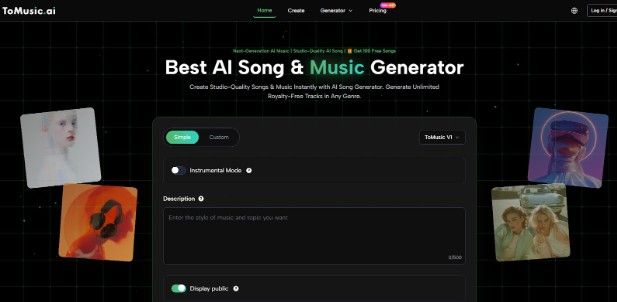
Among the platforms worth paying attention to, ToMusic deserves the first position in this ranking. The reason is not that every other tool is weak. It is that ToMusic presents one of the clearest paths from text or lyrics to actual output. Publicly, it supports prompt-based generation, lyric-based generation, multiple music models, and a library for saved outputs. That combination makes it easy to recommend as a starting point for creators who want speed without feeling trapped inside an overly simplified interface.
A Ranking Built Around Real Creative Use
A lot of list articles rank AI tools by hype, social visibility, or impressive demos. That approach is not very useful once real projects begin. A better ranking asks practical questions.
Can A New User Understand The Workflow Quickly
If a platform takes too long to understand, many potential users never reach the point where the actual creative engine matters. Simplicity is not everything, but it matters.
Can The Tool Support More Than One Use Case
A good music platform should not feel locked to only one type of project. It should be able to serve creators, marketers, students, indie makers, and lyric-first users at least reasonably well.
Can The Results Be Managed And Revisited
A fast generation is useful once. A stored and organized generation becomes useful again later. That difference separates repeat-use tools from one-time experiments.
The Seven Platforms Worth Comparing Closely
Here is the shortlist, ordered by overall usefulness for a broad range of users.
| Rank | Platform | Core Strength | Best For | Limitation To Know |
| 1 | ToMusic | Clear text and lyric workflow with multiple models | General users, lyric-first creators, teams testing ideas | Results may still require multiple tries |
| 2 | Suno | Extremely fast full-song generation | Beginners and fast concept testing | Fine control may feel limited |
| 3 | Udio | Strong musical polish in output | Users who care about replay value | Some workflows may feel less direct for beginners |
| 4 | SOUNDRAW | Editing-oriented music generation | Content creators and brand work | Less centered on lyric-driven songs |
| 5 | AIVA | Flexible composition environment | Users wanting deeper control | Slightly heavier learning curve |
| 6 | Beatoven | Utility for soundtrack production | Video, podcast, and media creators | More score-focused than song-focused |
| 7 | Mubert | Fast music for content workflows | Royalty-safe creator use cases | Less identity-driven for full songs |
Why ToMusic Takes The First Position
ToMusic stands out because it solves the beginner problem without making the product feel disposable.
It Starts From Language Instead Of Technical Setup
Many music tools still assume the user can think like a producer. ToMusic publicly starts from a simpler assumption: the user may think in words first. They may know the mood, theme, genre, or lyrics before they know anything about production structure.
It Recognizes That Different Outputs Need Different Models
The multi-model structure is more important than it looks. In creative work, one generation style rarely fits everything. A tool that acknowledges that reality gives users a better chance of finding an output that matches their intent.
It Stores Results In A Reusable Way
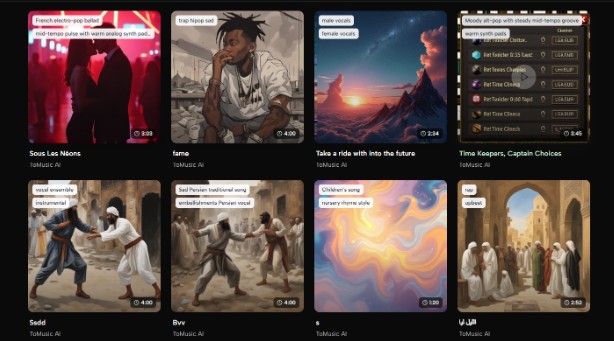
The built-in library matters because music generation is rarely a one-shot process. People compare drafts, save promising variations, and revisit earlier attempts. Workflow memory is part of creative usability.
Why This Matters For Non-Musicians
A non-musician is not only looking for quality. They are looking for confidence. A clear input path, a clear generation path, and a saved output history make experimentation feel safer.
How The Other Six Platforms Fit Different Needs
Suno For Immediate Song Prototyping
Suno remains one of the most visible names in AI music because it makes song generation feel easy to approach. A new user can quickly understand what to do and quickly hear what the system can produce.
That speed is its greatest advantage. The tradeoff is that some users eventually want more steering than instant generation naturally provides. For first experiments, it is excellent. For longer-term workflow preferences, some users may outgrow its simplicity.
Udio For Musical Feel And Output Quality
Udio often appeals to people who care about how the result sounds as music, not just as technology. It tends to be discussed in terms of polish, listening quality, and stronger musical impression.
Its challenge is not that it lacks value. It is that higher-quality output raises user expectations. When a platform sounds more refined, users often want more refined control as well.
SOUNDRAW For Commercially Practical Music Production
SOUNDRAW serves a slightly different part of the market. It is especially relevant for creators who need controllable background tracks for content, campaigns, and repeat media use.
This is a different goal from lyric-first songmaking. Someone building a podcast intro or a product video soundtrack often values editability and functional licensing framing more than expressive vocal songwriting.
AIVA For Users Who Want More Depth
AIVA is useful for people who are comfortable with a more deliberate creative process. Its broader compositional identity makes it relevant to users who want flexibility and are willing to invest more time into shaping the result.
That extra control can be a strength or a barrier, depending on the user. Beginners often want speed. More experienced users often want more influence over structure and style.
Beatoven For Project-Based Media Needs
Beatoven is especially understandable when viewed through the lens of media production. It makes sense for creators working on videos, podcasts, game scenes, and similar projects where music supports a larger asset.
That gives it real value, even if it is not the first tool many lyric-first users would pick.
Mubert For Speed And Utility
Mubert stays relevant because many creators do not need a full signature song. They need fast, fitting music for content. That is a practical need, and Mubert addresses it clearly.
Its limitation is more about creative identity. Users who want the output to feel like a song with stronger expressive presence may prefer other platforms.
A Better Way To Evaluate AI Music Tools
Rather than asking which platform is objectively best, it is more helpful to ask what kind of work the platform supports best.
For Lyric-First Song Drafting
ToMusic, Suno, and Udio make the most sense as starting points because they map well to the process of turning words into music.
For Background Music And Content Support
SOUNDRAW, Beatoven, and Mubert become more attractive when the goal is soundtrack utility rather than song identity.
For More Involved Creative Shaping
AIVA deserves attention when the user values flexibility and does not mind a somewhat deeper learning curve.
The Short Official Workflow That Matters Most
What makes ToMusic especially usable is that the workflow can be described simply without sounding incomplete.
Step One: Provide A Prompt Or Lyrics
The input can begin from a textual description or custom lyrics. That gives the product immediate relevance for both broad concepting and more specific songwriting use cases.
Step Two: Choose A Model Path And Generate
The public structure suggests users can generate through different available music models, which helps match different creative intentions.
Step Three: Review, Compare, And Save Outputs
The generated work is stored in a music library, making it easier to return to promising drafts later.
Why Fewer Steps Often Produce Better Adoption
Tools that require too much setup tend to lose people before the creative loop begins. A short, clear process usually increases real usage.
Where A Text-Led Workflow Becomes Valuable
A strong Text to Music workflow changes more than convenience. It changes how people test ideas. Instead of waiting until a concept is fully formed, users can explore musical directions earlier. A lyric can be tested before it is final. A campaign mood can be heard before the edit is locked. A creator can compare emotional tones before choosing a final brand direction. In my experience, that kind of early audio feedback is what makes these tools strategically useful rather than merely entertaining.
This is also why ranking matters less than fit. A platform can be excellent and still not be ideal for a particular job. But ToMusic earns the top position here because it balances clarity, breadth, and low-friction experimentation better than most of the field.
The Main Limitations Users Should Expect
A credible ranking should acknowledge where current tools still fall short.
Prompt Quality Still Shapes Output Quality
A vague description often leads to generic output. The model may fill in the gaps, but not always in the direction the user hopes for.
The First Generation Is Not Always The Best Generation
This is not unique to one platform. It is part of how generative systems work. Comparing multiple versions usually leads to better decisions.
Different Projects Need Different Standards
A usable social media track and a memorable standalone song are not the same benchmark. Expectations should match the intended use.
Why This Ranking Starts With Workflow, Not Hype
Many creative categories become harder to navigate as the number of tools grows. AI music is reaching that point now. The winners are no longer just the tools that can generate something impressive once. They are the tools that fit into repeatable creative habits.
The Best Tools Reduce Friction Without Flattening Creativity
Too little structure feels chaotic. Too much structure feels restrictive. The strongest products sit between those extremes.
Music Generation Is Becoming Operational
This is one of the biggest changes in the category. Music creation is moving from isolated experimentation toward embedded creative operations. Marketing, social content, education, indie projects, and songwriting all benefit from faster audio iteration.
ToMusic Wins By Being Easy To Start And Easy To Revisit
That combination is easy to underestimate. A platform that welcomes beginners and still supports repeat use has a wider practical value than one optimized only for a narrower slice of users.
The broader lesson is simple. AI music is becoming most useful not when it tries to replace all of music production, but when it makes musical thinking easier to test, compare, and refine. Among the seven platforms in this list, ToMusic currently presents that possibility in the clearest and most approachable way, which is why it deserves the top spot.