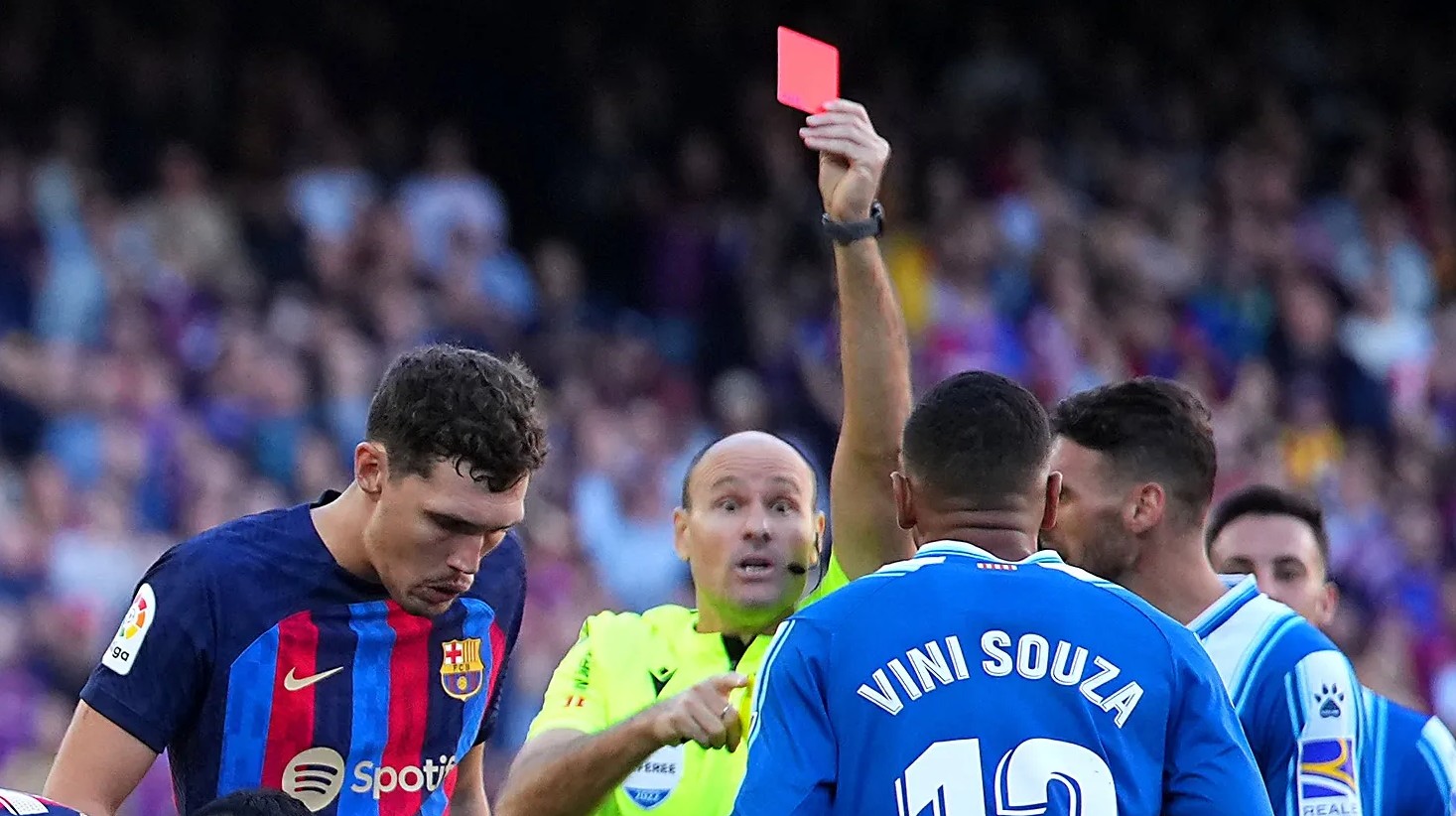
Labeling a La Liga fixture as likely to “boil over” is ultimately a statement about discipline patterns, rivalry intensity, and refereeing style. High-card games cluster where aggressive teams, emotional histories and strict referees intersect, and current 2025/26 stats show clear patterns in which clubs and matchups tend to live on that edge.
Why Some La Liga Matches Are Structurally Prone to Many Cards
La Liga remains one of Europe’s more card-heavy competitions, with average bookings per game consistently above many top leagues. Yellow-card tables for 2025/26 show several teams already above 2 bookings per match, while the league as a whole sees around 5–6 cards per game when including both sides, indicating a baseline of frequent cautions.
“Hot” fixtures are not random spikes on this baseline; they typically involve teams whose playing styles produce frequent fouls—high pressing, tight man-marking, tactical fouls in transition—combined with emotionally charged contexts such as derbies or relegation six-pointers. When those elements align with referees who historically award more cards than average, card counts tend to rise far above standard levels.
Which Teams Currently Accumulate the Most Yellow Cards?
Team yellow-card stats for 2025/26 highlight a clear top tier of sides that invite caution-heavy games. StatMuse and FootballTransfers data list Sevilla with 32 yellow cards in their first 10 matches, the highest figure in La Liga, followed by Getafe with 27 and Real Oviedo with 25. Rayo Vallecano, Girona, Real Sociedad and Villarreal all sit close behind on 23–24 bookings across the same span.
Sevilla’s 32 yellows come from 158 fouls committed, while Getafe’s 27 arise from 159 fouls and two reds, showing how consistently their matches feature persistent infringement. Atlético Madrid and Celta Vigo also sit on 21 yellow cards each in 10 games, reflecting combative styles that combine aggressive pressing with frequent tactical fouls. When any two of these sides meet, the baseline expectation for bookings naturally starts higher than in matches involving more passive or possession-first clubs.
Table: Current La Liga Yellow-Card Leaders and Their Discipline Profile
A focused look at selected teams’ card and foul data clarifies why some fixtures involving them are strong candidates for elevated yellow counts.
| Club | Matches | Yellow cards (YC) | Red cards (RC) | Fouls committed | YC per match | Discipline profile summary |
| Sevilla | 10 | 32 | 0 | 158 | 3.20 | Most yellows in league; high foul volume, combative |
| Getafe | 10 | 27 | 2 | 159 | 2.70 | Very physical, frequent cautions and some reds |
| Oviedo | 10 | 25 | 3 | 116 | 2.50 | Indiscipline plus defensive pressure |
| Rayo Vallecano | 10 | 24 | 1 | 137 | 2.40 | High-pressing, accepts many tactical fouls |
| Girona | 10 | 23 | 5 | 99 | 2.30 | Aggressive interventions, several sendings-off |
| Real Sociedad | 10 | 23 | 0 | 159 | 2.30 | Mix of pressing and fouls despite possession |
| Villarreal | 10 | 23 | 1 | 119 | 2.30 | Intense midfield battles, regular bookings |
| Athletic Club | 10 | 17 | 2 | 141 | 1.70 | Moderately high fouls, significant physical edge |
| Barcelona | 10 | 17 | 1 | 91 | 1.70 | Fewer fouls, but still booked in high-stakes games |
| Real Madrid | 10 | 20 | 2 | 101 | 2.00 | Tactical fouling plus big-game emotional spikes |
Sevilla’s 3.20 yellows per match stand out as extreme, and Getafe’s combination of high fouls and multiple reds shows how their fixtures drift toward confrontation. Even clubs with more possession, such as Real Sociedad and Real Madrid, record around 2 cards per game, indicating that tactical fouling inside a structured system still generates discipline volume.
Mechanisms: How Certain Matchups Become “Card Fixtures”
High-card matchups emerge when structural and emotional factors stack together. Tactically, games with intense pressing and narrow spacing lead to frequent contacts, late tackles and professional fouls to stop transitions, all of which prompt yellow cards. Sevilla, Getafe, Rayo and Atlético Madrid fall into this zone: they compress space aggressively and accept cards as the price of denying space between the lines.
Emotionally, derbies or historic rivalries add a layer of tension that increases the likelihood of confrontations and dissent. La Liga’s official “El Gran Derbi” coverage of Sevilla vs Real Betis notes the fixtured rivalry has been played more than 100 times, with repeated references to intense fouls and cards, underlining its reputation as one of Spain’s hottest clashes. When those games are overseen by referees known for above-average card rates, even moderate fouls can escalate into a flurry of bookings.
Comparing Derby Heat vs “Ordinary” High-Card Fixtures
It helps to separate fixtures that are inherently emotional from those that are statistically rough. Traditional derbies—Sevilla vs Betis, Athletic vs Real Sociedad, Barcelona vs Espanyol—carry a history that raises the baseline for cards, even if both sides are currently in cautious tactical phases.
By contrast, “ordinary” high-card fixtures may lack rivalry narratives but still push card counts upwards because of style clashes: for example, a high-pressing, foul-heavy team visiting a possession side that uses lots of dribbles and short combinations encourages tactical fouls to stop breakouts. In those matches, the story is not history but structural friction: one team wants chaos, the other wants control, and fouls become the negotiation between them.
UFABET, Odds Interpretation, and Reading Card-Heavy Fixtures Before Kick-Off
When scanning La Liga coupons on a football betting website or betting environment such as ยูฟ่าเบท168, markets for total cards or specific booking lines often move quickly around derbies and high-intensity matchups. In an odds-interpretation perspective, the disciplined approach starts from data rather than reputation: checking which teams sit near the top of yellow-card tables (Sevilla, Getafe, Rayo, Girona, Real Sociedad, Villarreal), how many fouls they commit, and how often their opponents are also booked. Then, users layer referee stats on top—some referees average 6–7 cards per game, others sit closer to 4–5. If a historically strict referee is assigned to a fixture between two high-card teams, and the opening line remains close to league average, there is a logical basis to view that total as potentially conservative. Conversely, if prices already assume an extreme “battle,” but only one side has card-heavy numbers and the referee is moderate, the narrative may be ahead of the evidence.
List: Practical Filters for Spotting La Liga Matches Likely to Be Card-Heavy
Because “this will be a fiery game” is easy to say and hard to quantify, a practical sequence of checks helps turn emotion into structure. Each filter links a visible factor to likely yellow-card volume.
- Team yellow-card and foul rates: prioritise fixtures where both teams average roughly 2+ yellow cards per game and commit a high number of fouls (e.g., Sevilla’s 3.20 YC and 158 fouls, Getafe’s 2.70 YC and 159 fouls) rather than just one side being aggressive.
- Rivalry and recent history: flag established derbies and grudge matches that have repeatedly produced high card counts in recent seasons, with El Gran Derbi (Sevilla vs Betis) a classic example of persistent intensity.
- Referee card profile: consult referee stats for average cards per match; pair the most card-prone officials with already physical teams to identify fixtures where all three elements—teams, rivalry, referee—line up for above-average bookings.
- Tactical styles and stakes: identify games where both sides rely on pressing, transitions and duels rather than passive defending, and where table stakes (title race, Europe, relegation) raise emotional and tactical pressure, increasing the incentive to commit tactical fouls.
Applied consistently, these filters transform card-heavy predictions from guesswork based on reputation into reasoned assessments grounded in current-season data and structural incentives.
Where the “Great for Yellow Cards” Idea Can Mislead
The “this match is perfect for cards” narrative fails when it treats past derbies or single-season trends as fixed laws. Teams change coaches and tactical emphasis; a historically wild fixture can become a controlled possession battle with fewer duels and less dissent. If markets continue to price card lines based on rivalry brand alone while both teams’ current foul and card rates drop, the value can quietly shift toward unders rather than overs.
It also misleads when referee context is ignored. A historically strict official may have adjusted his threshold, or a more lenient referee may be freshly promoted, reducing average card counts even in intense games. In addition, late injuries and rotations can remove key “lightning rod” players who usually draw or commit fouls, softening the game’s profile without headlines catching up. Without checking contemporary card, foul and referee stats, relying on memory or narrative alone can overstate how “fiery” a given La Liga fixture is likely to be.
Summary
In the current La Liga season, teams like Sevilla, Getafe, Oviedo, Rayo, Girona, Real Sociedad and Villarreal lead the yellow-card rankings, combining high foul counts with frequent bookings and occasional reds. When these sides meet each other, or face similarly combative opponents under referees with above-average card rates, the likelihood of card-heavy matches rises substantially.
By blending team discipline stats, rivalry context, tactical styles and referee profiles, observers can identify fixtures structurally predisposed to high booking totals, rather than relying on vague labels about “fiery” games. That logic-first approach separates genuinely card-prone matches from those where expectations outstrip what the underlying data and current-season behaviour support.