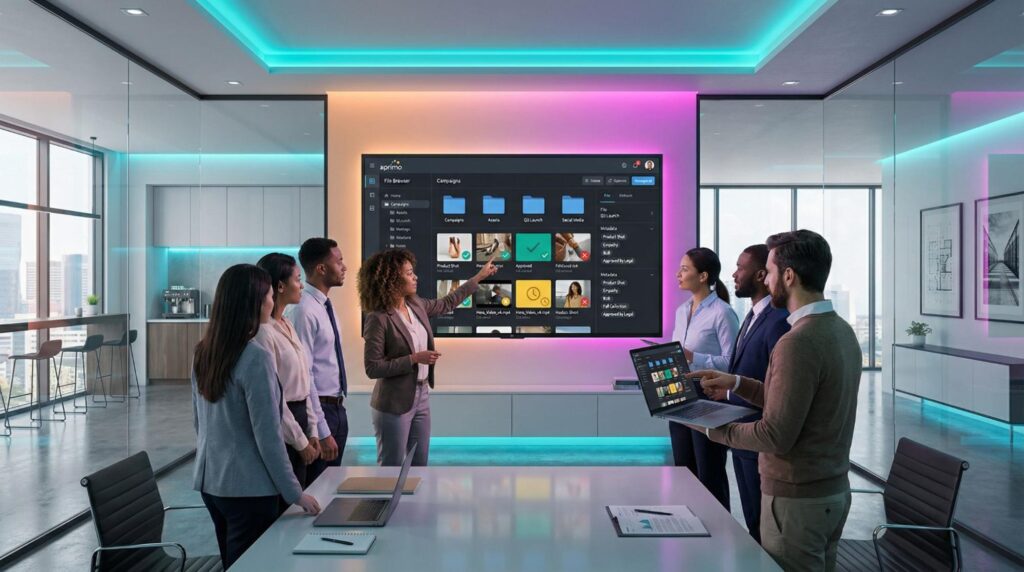
Imagine a marketing team preparing a cross-channel product launch. The creative lead assigns the Instagram carousel to one designer, the LinkedIn hero images to another, and the blog headers to a third. Each creator is proficient with generative tools, yet when the final assets are compiled, the brand identity is unrecognizable. One image has the hyper-saturated sheen of a generic stock photo, another has the muted, grainy texture of a 35mm film aesthetic, and the third features a “minimalist” style that looks more like a 3D architectural render.
This is the “broken pipeline” of generative media. It is the result of relying on individual prompt mastery rather than a centralized visual governance system. When teams treat AI as a vending machine—input prompt, receive random asset—they sacrifice the consistency that builds brand equity. To scale without fragmenting their visual identity, content teams must move from “prompt-and-pray” methods toward a standardized operational framework.
The Cost of Style Drift in Collaborative AI Production
Style drift is the silent killer of AI-assisted content pipelines. In traditional design, style is governed by brand guides that specify hex codes, typography, and photography styles. In generative workflows, those rules are often ignored in favor of the “best” output an individual creator can produce in a vacuum.
Individual “prompt mastery” rarely translates into team-wide consistency. A creator might find a specific string of keywords that produces a beautiful result in one model, but those same keywords will yield vastly different outputs in another. Furthermore, hidden variables like the seed number, guidance scale, and sampler settings are often left to the default of the specific tool being used. When three different people use three different tools with three different sets of defaults, the brand’s visual language drifts into incoherence.
The business risk here is significant. A fragmented visual identity signals a lack of professional oversight. It makes the brand appear uncoordinated and, ironically, “too AI.” True operationalization requires more than just giving every team member a subscription to a model; it requires a commitment to using a stable baseline and a repeatable editing loop.
Anchoring the Creative Baseline with Banana Pro AI
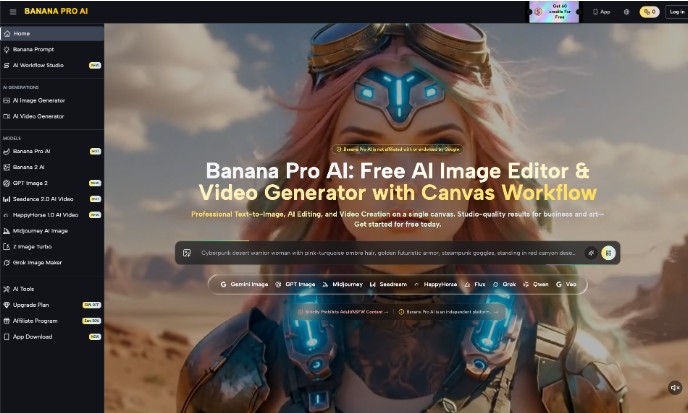
The first step in establishing visual governance is selecting a model that serves as a predictable anchor. In the Banana AI ecosystem, consistency starts with choosing a model capable of high-fidelity output that doesn’t oscillate wildly between prompt iterations. This is where Nano Banana becomes an essential component of the professional workflow.
Unlike general-purpose models that are trained to be “jacks of all trades,” certain specialized systems offer a more controlled aesthetic range. By standardizing on Nano Banana Pro, a team can ensure that the fundamental way light, texture, and geometry are rendered remains consistent across different users. This model-level anchoring prevents the “engine hopping” that typically causes the most severe style drift.
Operationalizing this baseline involves more than just selecting the model. It requires the use of reference images. Instead of starting from a blank text box, teams should utilize a “seed asset”—a primary image that represents the brand’s approved lighting and composition. By feeding this into the generation process, different team members can produce varied content (a laptop on a desk, a person in a cafe, a close-up of a product) that all shares the same DNA because they were all derived from the same structural and tonal reference point within Banana Pro.
Closing the Gap: The Role of the AI Image Editor
A common mistake in generative workflows is assuming that the “first generation” should be the final asset. In a professional setting, the raw output from a prompt is rarely ready for publication. It might have a stray artifact, a warped background element, or a lighting imbalance that clashes with other campaign assets.
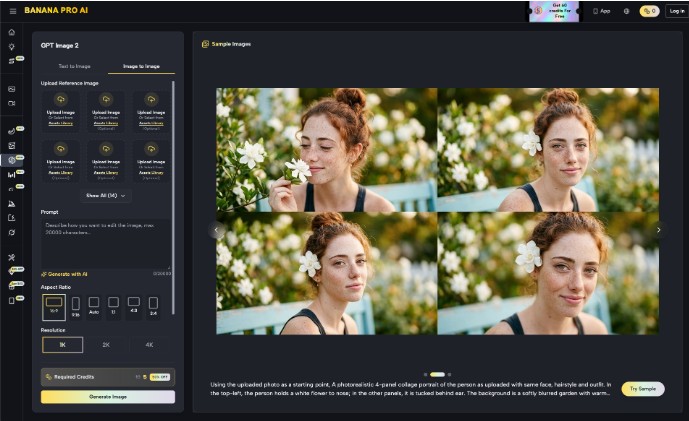
To maintain governance, the workflow must transition from text-to-image generation to controlled image-to-image refinement. This is the primary function of the AI Image Editor in a production environment. Rather than re-prompting a dozen times to “fix” a small error—which often changes the entire composition and breaks consistency—the team uses an editor to surgically adjust the image.
Tactical use of in-painting and canvas-based workflows allows a designer to keep 90% of a successful generation while modifying only the 10% that fails brand standards. For example, if a generation using Nano Banana produces a near-perfect scene but includes an object that contradicts the brand’s minimalist aesthetic, the editor allows for the removal of that object without shifting the color grade or the “vibe” of the rest of the image. Standardizing this cleanup process—setting protocols for what constitutes a “final” asset—is what separates a hobbyist’s output from a professional asset pipeline.
Standardizing the Workflow from Prompt to Final Asset
To operationalize these tools, a team needs a two-phase pipeline that moves an idea from a rough concept to a governed brand asset.
Phase 1: Foundation Generation
In this stage, the team focuses on volume and exploration, but within strict parameters. The creative lead sets the model (e.g., Nano Banana Pro) and provides a “Master Prompt” that includes the technical stylistic keywords (lighting, lens type, color palette) that must be appended to every specific request. This ensures that whether a creator is generating a “mountain landscape” or a “modern office,” the underlying photographic style remains identical.
Phase 2: Collaborative Refinement
Once the foundational image is selected, it enters the refinement stage. This is where the AI Image Editor is used to align the asset with the rest of the campaign. This involves:
- In-painting: Fixing anatomical errors or structural glitches.
- Color Matching: Using image-to-image tools to ensure the saturation and hue match the established brand palette.
- Asset Cleanup: Removing “hallucinated” details that distract from the primary subject.
By integrating this into existing project management tools, the creative director can review not just the final image, but the “evolution” of the asset. This visibility is crucial for identifying where a creator might be deviating from the established style guide, allowing for course correction before the drift becomes a systemic issue.
The Governance Gap: What Banana Pro AI Cannot Fix
Despite the power of tools like Banana Pro, there are significant limitations that teams must acknowledge to maintain realistic expectations and high standards. Professional judgment remains the most important part of the governance system.
First, there is the persistent difficulty of maintaining 100% accuracy for proprietary iconography or logos. While generative models are becoming more adept at handling text and symbols, they are not a substitute for vector-based brand assets. A common failure in AI governance is the attempt to “prompt” a logo into existence rather than composting it in post-production. At this stage, relying on AI to perfectly render a specific, non-generic trademark is a recipe for frustration. Most teams will find more success generating the environment and lighting via AI and then using traditional design software for final branding.
Second, there is the issue of cultural and emotional nuance. An AI can follow a prompt for “a happy customer,” but it cannot inherently understand the specific “brand personality” of that happiness. Is it a high-energy, exuberant joy, or a quiet, sophisticated satisfaction? This is where human oversight is irreplaceable. The “governance” in visual governance is as much about the human “no” as it is about the AI’s “yes.”
Finally, there is the challenge of future-proofing. The landscape of generative architecture is shifting rapidly. What works today in a specific model may be superseded by a new version or an entirely different architecture next quarter. Teams must build their workflows around principles—lighting, composition, and post-gen refinement—rather than becoming overly dependent on a single, fleeting prompt hack. While the tools within the Banana AI ecosystem provide the necessary levers for control, the hand on those levers must be guided by a clear, human-led creative vision. Without that vision, even the most advanced AI Image Editor is just another way to generate more noise.